
Interview prep
How to Practice Mock Interviews with AI (So Live Rounds Feel Familiar)
Most AI interview practice is an untimed chat — it transfers only when you speak a timed answer on the surface you will sit.
The HIDEA AI team
Updated 8 min read
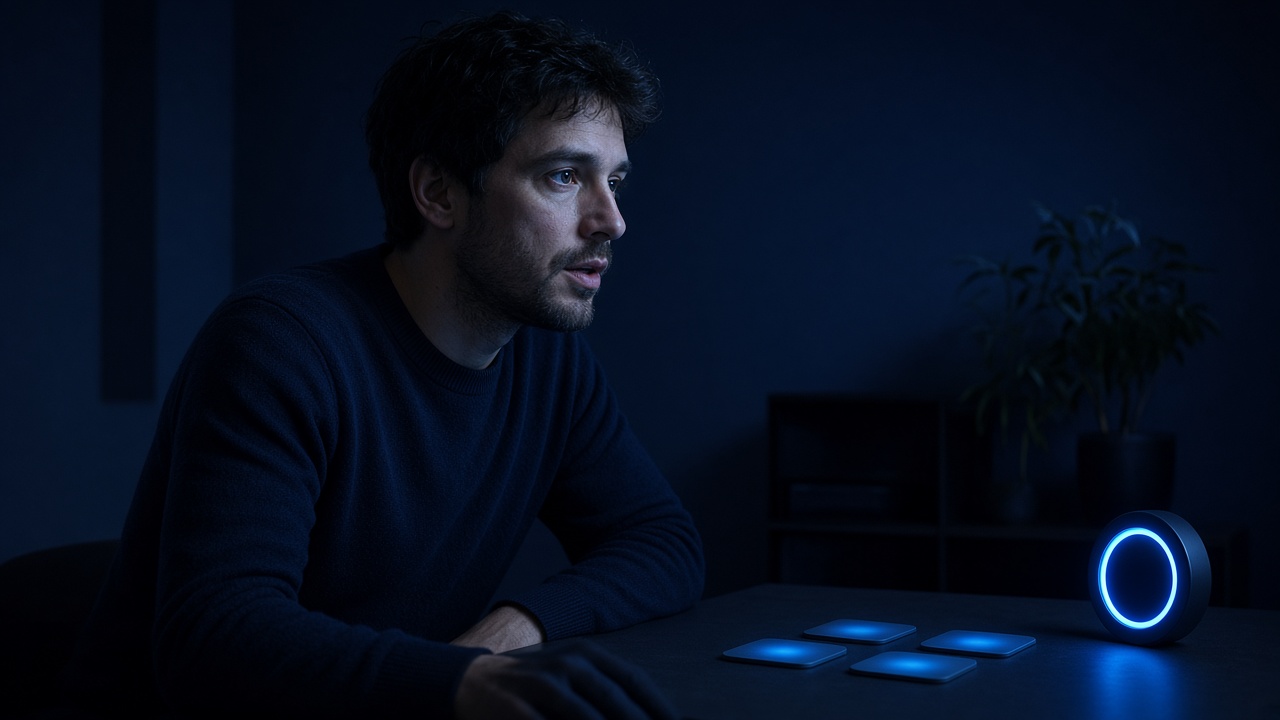
An AI mock interview works when it behaves like a real round: one chosen surface, a timer, an answer you say out loud, and a follow-up you did not prepare. A chat where you read and retype answers at leisure trains recognition, not delivery. Run three to five such mocks on separate days before a loop.
The model was not the weak part. The session was not a mock.
Why most "AI interview practice" doesn't stick
The usual session is a prompt and a reply. You paste a question, read a tidy answer, agree with it, and move on. That practises recognition. A live round asks you to produce an answer while someone waits.
Three habits keep that kind of practice from transferring.
- No clock. A reply you linger over in chat is a silence someone is sitting in.
- No voice. Typing an answer and saying one are different skills. Only one of them is on the call.
- No round. With no role and no surface, the chat drifts toward a generic candidate. You are interviewing for a specific job.
Leave the clock, your voice, and a chosen round out of practice, and the interview is the first time you meet all three.
What a useful mock interview actually trains
A useful mock adds little knowledge. You have the material or you do not, and one sitting will not install it. What it trains is the part that only shows up when the question is new and the time is short.
That means starting before the answer is finished in your head, staying on the question instead of wandering, and stopping while the point is still clear. Then one follow-up you did not prepare, answered without going back to the beginning.
Miss those and the round feels unfamiliar, however many sample questions you read the night before.
A simple mock routine you can run this week
One mock. One surface. Under forty-five minutes, including notes. If you only have one evening, run this once. Collecting prompts is a different activity, and it does not help on the day.
Before you start (10 minutes)
Pick the round: verbal, live coding, system design, or a project walkthrough. Write the role in one line, and two or three facts from the job description you would be annoyed to forget.
Choose the question yourself, or ask for a single question and stop reading there. If the model answers before you do, the session turns into a reconstruction of its version.
Set a timer for the length of the real segment. Fifteen minutes covers a spoken answer and one follow-up. Use twenty-five to thirty for a design or a project.
During the mock (15–30 minutes)
Say the answer out loud. Typing is what you do when you cannot speak, not the default. A silent mock trains something the interviewer will not see.
- Hear the question once. Restate the constraint in one sentence if you need to, then start. Reading it again is stalling.
- Answer in your own words. If you stall, ask what you have not covered yet, then say that part yourself. Do not take a finished paragraph and recite it.
- Take one follow-up. The first answer is warmup. The follow-up is the mock.
- Stop when the timer ends. Running long in practice teaches you that running long is allowed.
After the mock (5–10 minutes)
Write three lines before you ask for any critique: what you actually said in the first twenty seconds, the follow-up that caught you, and one sentence you will say differently next time.
If you want a second opinion after that, hand over your own words and ask what was missing. Do not ask for a rewrite. A rewrite is a new script. A gap is something you can fix on the next run.
An ordinary chat can host this routine. It carries further when the mock and the live round are the same kind of session, so the week of the interview is not a new format. HIDEA AI is a desktop copilot for both, on macOS and Windows, with Verbal, Live coding, System design, and Project as separate surfaces. Fifteen minutes a day is free, which is one mock of this length. Move to Pro when you need more time than that.
Practice by interview surface
Keep the routine and change the surface. One surface per session. Touching all four in an afternoon teaches you to switch, and a single round will not ask for that.
Verbal
One question, spoken, then a follow-up aimed at whatever you skipped. Finish the first pass inside the timer. The usual failure is a clean opening with nothing behind it — keep the detail ready, and do not spend it all in the first half-minute.
Live coding
Talk through the approach before much code exists. State the input, the output, and one case that breaks the obvious version, then write the smallest thing that works. Say what you would change if they want it faster. The mock is that path from a blank editor to a working approach without going quiet, not a stack of solved problems.
System design
Use the opening minutes to bound it: who it is for, what has to be fast, and what can wait. Name the pieces you would draw and one you are leaving out, with a reason. Stop before the design covers the whole company. Chasing completeness is how these answers run out of time.
Project
Pick one thing you shipped. The constraint, the decision you made, and what you would change. Hold a second decision for the follow-up. These rounds go badly when the answer is a tour of the repository. What lands is a choice you owned.
What should an AI mock interview give you feedback on?
Feedback is useful when it points at something you can change on the next run. Ask for gaps in your own words, not a rewrite. Five things are worth checking after each mock.
- The first twenty seconds. Did you start with the answer or with context?
- Structure. Could a listener tell where the answer was going?
- Specifics. Did you name your own decision, number or trade-off, or stay general?
- Length against the timer. Did you stop, or did the clock stop you?
- The follow-up. Did you answer it, or restart the first answer?
Scored spoken mock rounds are part of the paid plans. The pricing page shows what each tier includes, and the free minutes are enough to run the timed block without feedback and write your own three lines.
How often to practice (without burning out)
Three serious mocks in the week before a loop beat a month of chatting. You are repeating a routine, not logging hours.
Do one the day you start, so the routine exists outside your head. Do two or three more on separate days, on the surfaces you are weakest at. The day before, rerun the worst of them, at the time of day the interview will actually happen if you can.
Stop once you can get through the answer without inventing the shape halfway through. Past that you are managing nerves, and a seventh pass of the same story does not fix nerves. If a session goes badly, write the three lines and leave it. An immediate retry only teaches you to perform the recovery, and the live round gives you one chance.
Try a mock on your machine
Nothing in the routine requires a particular product. The version that makes the live round feel familiar is the one you run in the same place you will open when the call starts.
HIDEA AI is a desktop copilot for live interviews and for this kind of mock, on macOS and Windows. You practise on the same surfaces you will use live — Verbal, Live coding, System design, and Project — and you speak or type every answer. On a live call the overlay is skipped by screen share. A mock has no call attached. Use it to find where you stall.
Download it and run one mock today: https://hidea.ai/download. Fifteen minutes a day is free, enough for the timed block once. Move to Pro when a single session is not enough.
If you only do one
Make it spoken, on the surface you will actually sit, with a clock and a follow-up. When you want that mock on the same desktop app as the live round, download HIDEA AI at https://hidea.ai/download.
Where to go next
- Read how the desktop app supports practice and live rounds on the interview copilot page.
- Compare scenarios on the use cases page.
- Run a 15-minute block today with Free AI mock interview.
- Practise the spoken surface in Verbal interview practice.
Frequently asked questions
How many AI mock interviews should I do before a real interview?
Three to five, on separate days, is enough for most loops. Count a mock only if it had a surface, a spoken answer, a follow-up and your own three lines of notes. Three of those do more than ten chats you skimmed.
Is an AI mock enough, or do I need a human mock too?
An AI mock is enough to get used to answering aloud on a clock. It will not look unconvinced or push on a claim you padded, and a person will. If you can get one human session, take it once your answers are stable. If not, do the AI mocks anyway.
Should I practise verbal and coding mocks separately?
Yes. Use the same routine in different sessions. Verbal is a short spoken answer. Coding is a narrated approach with some working code. Doing both in one sitting practises switching, which a single real round rarely asks for.
What is the difference between ChatGPT and a dedicated mock interview tool?
A general chat replies for as long as you type, with no round and no stop. A dedicated mock is scoped to one surface and runs in the same desktop app you open for the live interview. The model matters less than having a bounded session in the place you will use on the day.
Can I start with a free mock practice plan?
Yes. HIDEA AI is a free download with 15 session minutes a day, which fits one timed mock of the length described here. Spend it on a single surface rather than sampling all four. Scored mock rounds and more time are on Pro.